
Infrared Sauna or Traditional Sauna – What Is the Difference?
Infrared saunas and traditional saunas have a great deal in common. Both offer warmth, perspiration and a while when the pace is allowed to slow down. The way the heat is created – and the way it feels – is nonetheless clearly different.
Solportalen · 10 min read · 26 July 2026
In this article
- The short answer
- Infrared and traditional saunas at a glance
- How does a traditional sauna work?
- How does an infrared sauna work?
- Which sauna is the hottest?
- Perspiration and heat
- What does the research say?
- Which sauna suits you?
- Safety applies in both types of sauna
- Frequently asked questions about infrared and traditional saunas
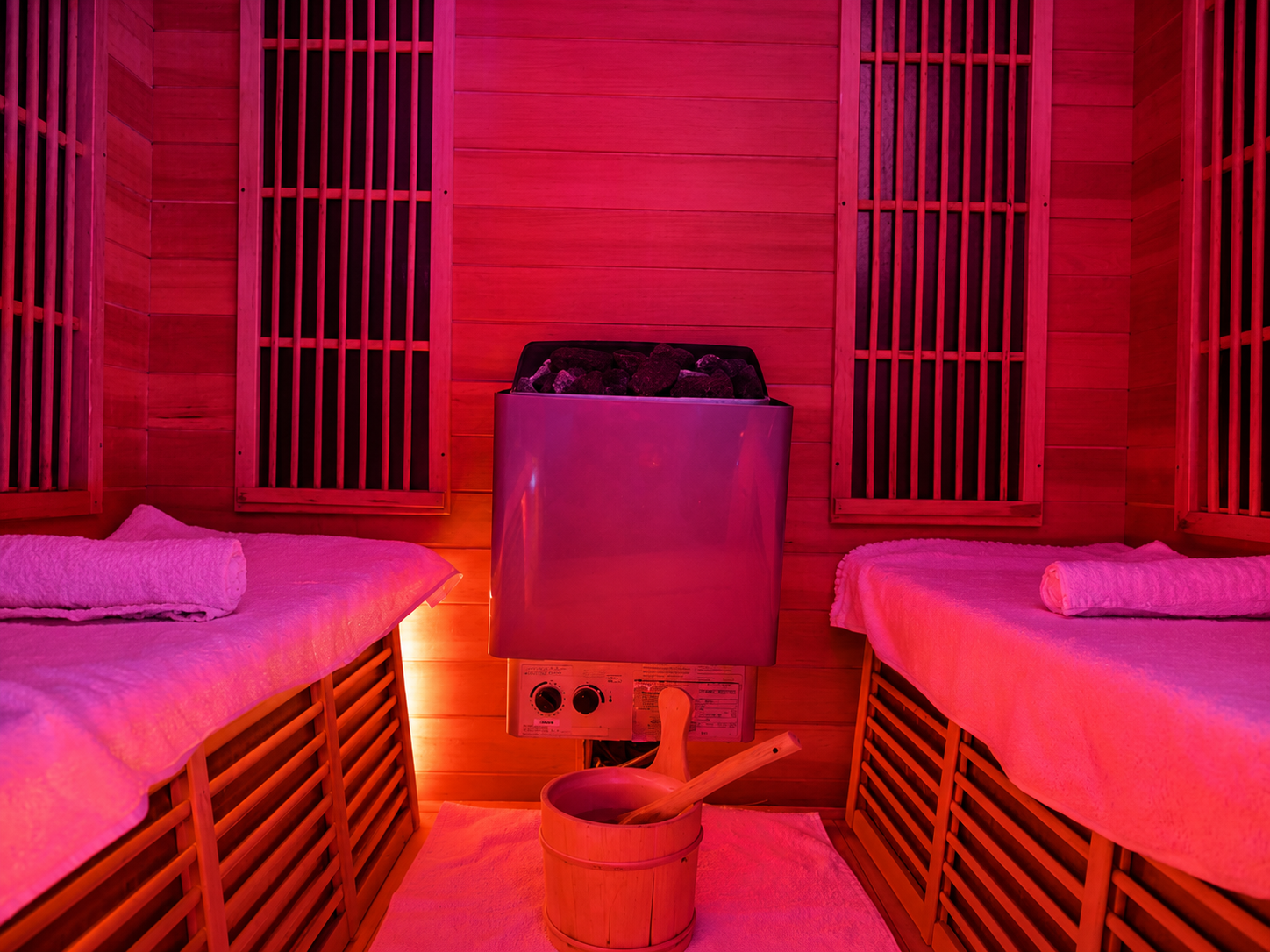
In a traditional sauna it is mainly the air that is heated by a stove. An infrared sauna instead uses heating elements that transfer a larger share of the warmth through infrared radiation.
The result is two different sauna experiences: one usually hotter and more intense, the other often gentler and more gradual.
Would you like to understand the basics first? Read our introductory guide to how an infrared sauna works.
The short answer
A traditional sauna often suits those who appreciate high temperatures, distinct sauna heat and the chance to pour water over hot stones.
An infrared sauna often suits those who prefer a lower air temperature, drier air and warmth that builds up gradually.
Neither type is automatically best for everyone. What matters most is the kind of heat and setting in which you feel most comfortable.
Infrared and traditional saunas at a glance
| Property | Infrared sauna | Traditional sauna |
|---|---|---|
| Heat source | Infrared heating elements | Electric or wood-fired stove |
| How the heat is transferred | Mainly through radiant heat and the warm surroundings | Mainly through hot air and heated surfaces |
| Typical temperature | Around 40–60 °C | Around 70–100 °C |
| Air | Usually dry and less intense | Dry base heat with briefly higher humidity when water is poured over the stones |
| Experience | Gradual, enveloping warmth | Hotter and more intense heat |
| Time in the sauna | Often longer, calmer sessions | Often shorter rounds with breaks |
| Often suits | Those who prefer a lower air temperature | Those who enjoy classic sauna heat and steam |
Heat source
- Infrared sauna
- Infrared heating elements
- Traditional sauna
- Electric or wood-fired stove
How the heat is transferred
- Infrared sauna
- Mainly through radiant heat and the warm surroundings
- Traditional sauna
- Mainly through hot air and heated surfaces
Typical temperature
- Infrared sauna
- Around 40–60 °C
- Traditional sauna
- Around 70–100 °C
Air
- Infrared sauna
- Usually dry and less intense
- Traditional sauna
- Dry base heat with briefly higher humidity when water is poured over the stones
Experience
- Infrared sauna
- Gradual, enveloping warmth
- Traditional sauna
- Hotter and more intense heat
Time in the sauna
- Infrared sauna
- Often longer, calmer sessions
- Traditional sauna
- Often shorter rounds with breaks
Often suits
- Infrared sauna
- Those who prefer a lower air temperature
- Traditional sauna
- Those who enjoy classic sauna heat and steam
Temperatures vary between saunas, models and settings. The table is therefore a general comparison rather than an exact rule for every facility.
How does a traditional sauna work?
A traditional sauna here mainly means a Finnish or Nordic sauna with a stove and heated stones.
The stove heats the stones, the air and the other surfaces in the room. The body then receives warmth from the hot air and from the heated surfaces around it.
The air is often relatively dry to begin with. When water is poured over the hot stones, a short wave of more humid and more intense heat is created. In the Finnish sauna tradition this is often called löyly.
A traditional sauna is often characterised by:
- a high air temperature
- distinct and immediate heat
- the possibility of creating sauna steam
- shorter rounds in the sauna
- breaks for cooling down
For many people, the alternation between heat and cool is an important part of the sauna ritual.
How does an infrared sauna work?
An infrared sauna uses heating elements that emit infrared radiation. The radiation is absorbed by the skin and other surfaces, where it is converted into heat.
Infrared radiation is a form of radiant heat and should not be confused with ultraviolet radiation, UV, which is found in sunlight and in sunbeds, among other places. They sit in different parts of the electromagnetic spectrum and have different properties.
The air in an infrared sauna also becomes warm, but it usually does not need to reach the same temperature as in a traditional sauna. A larger share of the experience comes from the radiant heat of the elements and from the heated surfaces inside the sauna.
An infrared sauna is often characterised by:
- a lower air temperature
- a dry environment
- gradual warmth
- the option of longer, calmer sessions
- less intense heat in the air
Many people therefore find it easier to stay in an infrared sauna for a longer while. The experience is individual, however. Some appreciate the lower air temperature, while others miss the distinct heat and steam of a traditional sauna.
Which sauna is the hottest?
The biggest difference is how the heat feels
The temperature on the display does not tell the whole story.
In a traditional sauna the hot air is often clearly noticeable across the whole body and with every breath. When water is poured over the stones, the heat can quickly become even more intense.
In an infrared sauna the temperature may feel comparatively mild at first. The warmth then builds up gradually from the heating elements and the surroundings. After a while the skin becomes warm and perspiration may increase, even though the air temperature is still lower than in a traditional sauna.
The difference can be simplified like this:
- A traditional sauna often gives faster and more intense heat.
- An infrared sauna often gives gentler warmth that builds up over a longer period.
Temperatures in practice
The traditional sauna usually has the highest air temperature.
A Finnish sauna is often used at around 70–100 degrees, while an infrared sauna is usually used at around 40–60 degrees. Exact temperatures vary between facilities and sauna models.
That does not mean an infrared sauna always feels cool. After a longer while both the warmth and the perspiration can become distinct.
How hot it feels is also affected by:
- how close you sit to the heating elements
- how long the sauna has been heated
- the humidity
- the length of the session
- your own heat tolerance
- your body temperature before the visit
Two people can therefore experience the same sauna and the same temperature in completely different ways.
Perspiration and heat
Do you perspire more in an infrared sauna?
It is not possible to say that everyone perspires more in one type of sauna than the other.
Perspiration is affected by the temperature, the humidity, the length of the session, your heat tolerance and individual differences in how the body regulates its temperature.
In a traditional sauna, perspiration can begin quickly because of the high air temperature. In an infrared sauna it may come more gradually and continue throughout a longer session.
Does an infrared sauna heat the body more deeply?
It is sometimes claimed that an infrared sauna heats the body considerably more deeply than a traditional sauna. That is a simplified description.
Different infrared wavelengths are absorbed at different depths. Long-wave infrared radiation, often used in far-infrared saunas, is mainly absorbed in the more superficial layers of the skin. The heat can then spread further through the tissue and the blood circulation.
At the same time, a traditional sauna can also raise the temperature of the body’s tissues through the high ambient temperature.
Research therefore does not suggest that an infrared sauna always heats the body more deeply or more effectively than a traditional sauna. It is more accurate to say that the two types transfer heat in different ways.
What happens in the body?
Both infrared and traditional saunas expose the body to heat. The body responds by, among other things:
- directing more blood towards the skin
- activating perspiration
- trying to release excess heat
- raising the pulse to varying degrees
How strong the response is depends on the total heat load, not solely on which type of sauna is used.
What does the research say?
A direct comparison between a traditional sauna, a far-infrared sauna and hot water showed that all the methods produced heat-related responses, but that the size of the changes varied. In several measurements the traditional sauna produced a stronger immediate response than the far-infrared sauna.
That does not mean one form of sauna is always better. It rather shows that a lower air temperature does not necessarily create the same physiological load as a hotter traditional sauna.
Which sauna has the strongest research support?
The most extensive research concerns the traditional Finnish sauna.
Several observational studies have found associations between regular traditional sauna bathing and various health outcomes. Such studies cannot on their own prove that the sauna causes those outcomes. People who use the sauna regularly may also differ from others in terms of lifestyle, health and social habits.
Scientific reviews describe the Finnish sauna as the form of passive heat exposure with the most consistent body of research.
There is research on infrared saunas as well, including work on cardiovascular health, pain and recovery. The studies are often smaller, shorter or carried out in particular patient groups. Some findings are interesting, but larger and more carefully controlled studies are needed before firm conclusions can be drawn.
Research findings about traditional saunas can therefore not automatically be transferred to infrared saunas.
Both types can offer warmth and relaxation, but they are not scientifically interchangeable in every context.
Which sauna suits you?
Which sauna is best for relaxation?
Relaxation is a personal experience and is not determined by the technology in the sauna alone.
A traditional sauna may suit you better if you appreciate:
- powerful and distinct heat
- sauna steam
- shorter and more intense rounds
- cooling down between rounds
- the classic Nordic sauna ritual
An infrared sauna may suit you better if you appreciate:
- a lower air temperature
- more gradual warmth
- one longer, unbroken while
- a dry and calm environment
- less intense heat around the face and when breathing
- the chance to wind down at your own pace
The point is not to choose the sauna that seems most advanced or most intense. It is to choose the setting in which you can actually relax.
Which sauna suits beginners?
Many beginners find an infrared sauna approachable because the air temperature is usually lower.
That does not mean the first session should be very long or very warm. An infrared sauna also involves heat load, perspiration and fluid loss.
A traditional sauna can suit a beginner well too, especially if the temperature is kept moderate and the session is kept short.
A calm first visit may mean that you:
- start with a shorter while
- choose a temperature that feels comfortable
- sit on a lower bench in a traditional sauna
- take a break when you need one
- drink water before and afterwards
- leave the sauna immediately if you start to feel unwell
A sauna should never feel like an endurance test. Practical information is available on the Before your visit page, and a step-by-step guide can be found in the article Your First Infrared Sauna – How to Prepare.
When hot air feels uncomfortable
An infrared sauna can be a better option for those who enjoy warmth but find the very hot air of a traditional sauna difficult.
Because the air temperature is usually lower, the experience can feel less intense around the face and when breathing. That is one reason why some people prefer an infrared sauna.
This does not mean an infrared sauna suits everyone. The body can become very warm there too, especially during a longer session.
Can you use both types of sauna?
For a healthy person who tolerates heat, the choice does not have to be permanent.
Some prefer an infrared sauna when they want a longer and calmer while. Others choose a traditional sauna when they want a shorter and more intense experience of heat.
The two types can therefore be seen as two different expressions of the same basic idea: giving the body warmth and creating space for recovery.
There is no need to use both during the same visit in order to have a complete sauna experience.
How to choose the right sauna
Three questions can make the choice easier.
1. How intense do you like the heat?
Choose a traditional sauna if you appreciate distinct and immediate heat.
Choose an infrared sauna if you prefer warmth that builds up more gradually.
2. Do you want sauna steam?
Choose a traditional sauna if water on hot stones and the briefly more humid air are an important part of the experience.
An infrared sauna is normally used without sauna steam.
3. How do you want to spend the time?
A traditional sauna often suits shorter rounds with cooling down in between.
An infrared sauna often suits one longer, unbroken while at a lower air temperature.
There is no wrong choice as long as the sauna is used responsibly and feels comfortable. See sauna prices if you would like to plan your visit.
Safety applies in both types of sauna
Both traditional and infrared saunas can lead to the body becoming too warm or losing too much fluid.
End the session if you experience:
- dizziness
- nausea
- headache
- unusual weakness
- confusion
- strong palpitations
- uncomfortable breathlessness
People who are pregnant or who have cardiovascular disease, kidney disease, blood pressure problems, reduced sensation, or who take medication affecting perspiration, blood pressure or fluid balance should consult a healthcare professional before sauna bathing.
The same applies to anyone who for other reasons may have an increased risk of overheating.
Frequently asked questions about infrared and traditional saunas
Not in general. An infrared sauna usually has a lower air temperature and more gradual warmth, while a traditional sauna offers a higher temperature and the option of sauna steam. Which one suits you best mainly depends on what you enjoy.
Many people find that it is, because the air temperature is normally lower. The experience is individual, and an infrared sauna can also feel very warm after a longer while.
You can become distinctly warm and perspire in both types of sauna. The total heat load can nonetheless differ depending on temperature, time and the construction of the sauna.
The heat can temporarily make the skin warm and rosy. There is not enough support, however, to say that either type of sauna generally rejuvenates the skin, builds collagen or treats skin conditions.
Both can feel relaxing after exercise. There is some research on heat and recovery, but the results vary. A sauna should not replace sleep, fluids, food or active recovery.
There is no length that suits everyone. The type of sauna, the temperature, habit, health and individual heat tolerance all matter. Start with a shorter while and leave the sauna before the heat becomes uncomfortable.
Two different paths to warmth and stillness
The difference between an infrared sauna and a traditional sauna is not only about technology.
The traditional sauna offers powerful heat, steam and clear shifts between hot and cool. The infrared sauna offers a lower air temperature and warmth that often builds up more gradually.
Both can create a pause from everyday life.
What matters is not which sauna becomes the hottest or makes you perspire the most. It is which setting helps you relax, notice how you feel and give your body a while without demands.
Discover the sauna at Solportalen
At Solportalen the private and calm experience is at the centre.
Here you can let the warmth become a defined pause from everyday life – without the session having to be about the highest temperature, the longest time or any other form of performance. Read more about the sauna and cold plunge or about what happens when the body moves between hot and cold.
Which kind of warmth suits you?
Explore Solportalen’s sauna environments and find a moment that suits the way you prefer to unwind.